Korean
 English
 Spanish
 Portuguese
 Arabic
 Indonesian
 Japanese
 Turkish
 Russian

추상적인
Sourcing PU 합성 가죽 for soccer balls carries significant risk when buyers cannot identify warning signs early in the evaluation process. This article outlines five critical risk signals that purchasing managers should monitor when evaluating potential material suppliers for football production. The first signal involves unclear material composition documentation and missing certifications. The second signal shows inconsistent batch quality and color variation across production runs. The third signal indicates absent or incomplete performance testing reports. Two additional risks involve inadequate sample validation procedures and insufficient supply chain transparency. Each signal carries direct consequences for match ball performance, player safety, and brand reputation. Buyers who understand these risk indicators can filter unreliable suppliers before committing to bulk orders. The article provides actionable verification steps and highlights three established Chinese manufacturers known for consistent output. It concludes with a practical checklist for pre-order due diligence.
목차
- What Is PU Synthetic Leather Used in Soccer Balls and Why Does Quality Matter?
- 5 Risk Signals When Sourcing PU Synthetic Leather for Soccer Balls
- Risk Signal #1: Unclear Material Composition and Certifications
- Risk Signal #2: Inconsistent Batch Quality and Color Variation
- Risk Signal #3: Missing Performance Testing Reports
- Avoid Risks, 3 Trustworthy Source Manufacturers
- How to Verify Supplier Credibility Before Placing Orders
- Final Checklist: Key Questions to Ask Before Sourcing PU Leather for Soccer
- Concluding Thoughts
What Is PU Synthetic Leather Used in Soccer Balls and Why Does Quality Matter?
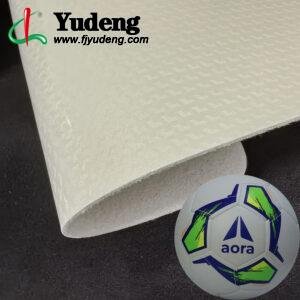
PU 합성 가죽 forms the outer casing of most modern soccer balls used in training and competitive play. PU stands for polyurethane, a thermosetting plastic engineered to deliver wear resistance, tear strength, good elasticity, and low-temperature flexibility. These properties give players accurate touch and help the ball retain its shape during intense use.
The choice between PU, TPU, and PVC directly affects how a ball performs on the field. PU balls remain softer and are preferred for match play. PVC alternatives are harder and better suited for practice sessions on rough surfaces. TPU sits between these two options and offers premium training characteristics at lower cost than full PU construction.
Quality sourcing matters because poor material selection produces tangible problems. A ball made with inadequately tested PU 합성 가죽 absorbs water, loses weight consistency, and degrades quickly after repeated impact. Panel seams fail under mechanical stress. Player confidence drops when the ball behaves unpredictably during kicks or slides on turf.
Research from industry testing programs confirms that balls built with properly tested PU material maintain consistent touch, shape retention, and surface texture for at least twice the service life of balls made with untested materials. (Yudeng Testing Data) This finding validates comprehensive material testing as a cost-effective strategy for manufacturers and purchasing organizations alike.
Governing bodies set strict regulations for official match ball size, weight, and shape. Training balls focus on extended durability across varied conditions. Regardless of category, the outer casing material determines whether a product meets those standards over its entire lifespan.
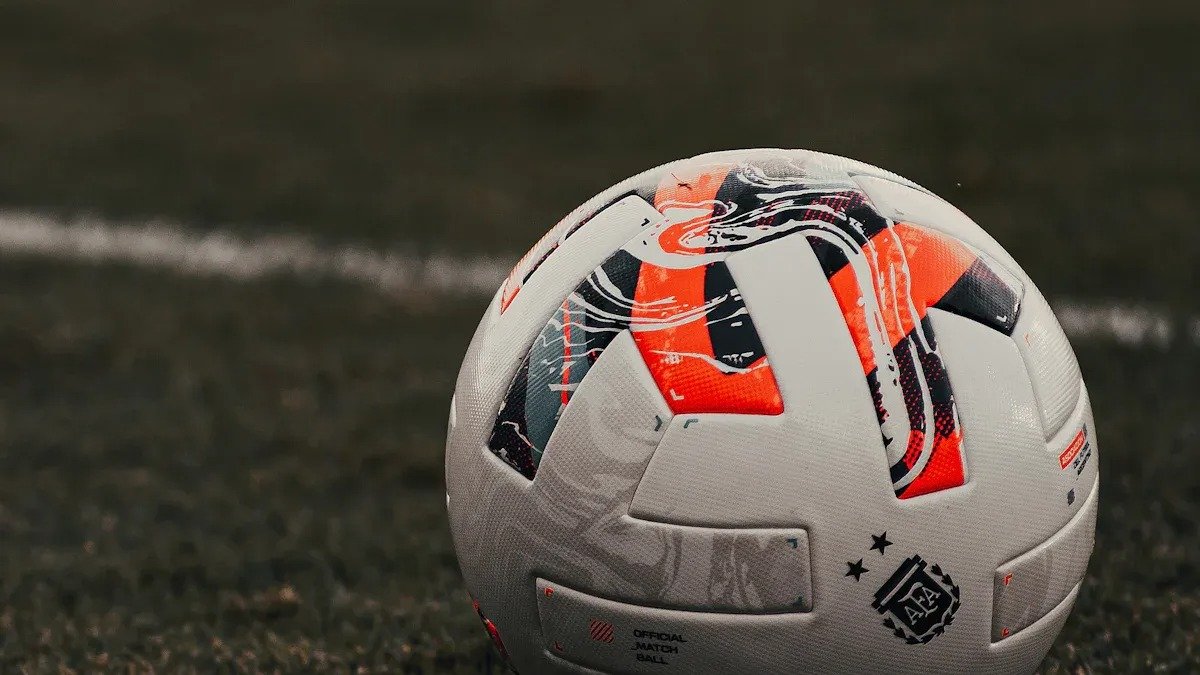
5 Risk Signals When Sourcing PU Synthetic Leather for Soccer Balls
Buyers evaluating new suppliers should monitor five key warning signs before placing bulk orders. Each signal points to a specific gap in supplier capability or transparency. Recognizing these red flags early prevents costly production failures and protects brand reputation.
Risk Signal #1: Unclear Material Composition and Certifications
Vague supplier documentation represents the first major warning sign. When a manufacturer cannot provide clear specifications for the chemical composition of its PU material, buyers face serious risk. Complete and reliable data must appear on safety data sheets and product labels to meet international hazard communication standards. (OSHA Hazard Classification Guidance) Without exact composition details, it becomes impossible to verify whether the material meets required performance thresholds.
Certifications serve as independent proof that a supplier follows recognized quality systems. Request documentation for ISO standards relevant to your market. Ask specifically for certificates covering quality management, environmental compliance, and occupational health and safety. Suppliers operating in global supply chains also benefit from certifications such as IATF 16949 for automotive-grade processes or GRS for recycled content verification.
| Certification Type | Purpose | Required Field |
|---|---|---|
| ISO 9001 | Quality management system baseline | Mandatory |
| ISO 14001 | Environmental management commitment | Preferred |
| ISO 45001 | Occupational health and safety standards | Preferred |
| GRS | Recycled content traceability | Conditional |
| IATF 16949 | Automotive-grade process control | Nice to have |
If a supplier resists sharing certification documents or provides expired certificates, treat this as a firm rejection signal. Legitimate manufacturers update their credentials regularly and share them without hesitation.
Risk Signal #2: Inconsistent Batch Quality and Color Variation
Inconsistent production batches damage finished products and erode buyer trust. Color variation between rolls of material creates visible defects in assembled balls. The same formula can produce different outputs when raw material lots vary, dosing systems drift, or processing parameters change without standardization.
Pigments from different suppliers or batches may differ in particle size, strength, or undertone. Polymer resin melt flow index varies between shipments. Additives interact differently depending on the batch. Even small dispersion issues create streaks or patches that finish inspectors catch only after assembly. (K&K Chemical Batch Variation Analysis)
Demand sample validation before approving bulk orders. Order small test quantities from multiple production lots and compare them side by side under identical lighting conditions. Measure color values with a spectrophotometer if available. Check physical properties including thickness, tensile strength, and surface texture across each sample.
A responsible supplier maintains accurate weighing and automated dosing systems. They standardize grinding time, speed, and equipment settings. They control temperature, cure time, and drying conditions between batches. If you cannot confirm these controls exist, do not proceed with the order.
Risk Signal #3: Missing Performance Testing Reports
Performance testing reports separate qualified suppliers from unreliable ones. Buyers must request test documentation covering water resistance, abrasion strength, cold flexibility, and rebound performance. These tests mirror actual playing conditions and predict how long a ball will last on the field.
Specific test methods carry international recognition. ASTM D624 covers tear resistance. ISO 48-4 addresses hardness measurement. The ISO 105 series evaluates colorfastness. Accepted reference standards ensure that test results are comparable across laboratories and suppliers. (Yudeng Key Indicators Guide)
Verify that test dates fall within six months of your sourcing decision. Old reports may not reflect current production quality. Request reports from ISO 17025 accredited laboratories whenever possible. Third-party accreditation adds credibility and reduces the chance of manipulated results.
Establish minimum threshold values for each indicator before sourcing begins. Set clear pass-fail criteria and share them with the supplier upfront. Do not accept vague statements such as the material meets quality standards. Demand numeric results with specified test methods.
| Test Category | Accepted Standard | Recommended Minimum Threshold |
|---|---|---|
| Tear Resistance | ASTM D624 | Refer to ball category spec sheet |
| Hardness | ISO 48-4 | Shore A range per application |
| Colorfastness | ISO 105 Series | Grade 4 or higher |
| Water Absorption | Industry standard method | Below 10 percent weight gain |
| Cold Flexibility | Custom low-temperature test protocol | No cracking at -10°C |

Three Established Manufacturers to Consider: Fujian Yudeng, Zhejiang Huafon, and Anhui Anli
Three established Chinese manufacturers demonstrate consistent quality and transparent operations in the PU 합성 가죽 space for soccer applications.
Fujian Yudeng Textile operates as a vertically integrated producer with an in-house fabric mill, resin plant, and leather production base. The company holds ISO 9001 certification and has served global brands across automotive, furniture, footwear, luggage, and electronics industries for 38 years. Their soccer-specific PU line includes dedicated testing protocols for abrasion, hydrolysis, and cold resistance. The facility spans approximately 458,000 square meters across planned expansion phases. (Yudeng Company Overview)
Zhejiang Huafon ranks among the largest synthetic leather producers in China. The company supplies material for multiple sport and industrial categories and maintains extensive in-house laboratory capabilities. Huafon publishes technical data sheets and supports custom specification development for buyers requiring tailored performance characteristics.
Anhui Anli Material Technology operates as a leading polyurethane composite material manufacturer. The company holds National Contract-keeping and Credit-valuing Enterprise status and maintains high credit ratings at major banks. Anli carries ISO 9001, ISO 14001, ISO 45001, IATF 16949, and ISO 50001 certifications. The company passed CNAS and SATRA laboratory assessments and earned recognition from the Anhui Provincial Government for quality performance. (Anhui Anli Company Introduction)
How to Verify Supplier Credibility Before Placing Orders
Supplier verification requires multiple layers of due diligence. Simple background checks do not replace hands-on investigation. The following steps build a complete picture of supplier reliability.
First, verify business registration through official channels. In China, you can cross-check a company through Qichacha or the State Administration of Market Regulation. Confirm that the registered address matches the manufacturing location. Mismatched addresses often indicate trading companies posing as manufacturers.
Second, examine export history. Request bills of lading samples, past customer references, and warehouse receipts. Search online trade forums using the company name alongside keywords such as scam or fake goods. Industry participants often flag problematic suppliers before regulators act. (Tradlinx Supplier Verification Checklist)
Third, engage third-party inspection services. Companies such as SGS, Bureau Veritas, and TÜV offer facility audits, product testing, and pre-shipment inspections. Independent verification removes reliance on supplier-provided documentation alone.
Fourth, place a trial order before committing to large volumes. A small test shipment reveals actual lead times, packaging quality, and material consistency. Use escrow payment protection through Trade Assurance platforms or Payoneer to reduce financial exposure during initial transactions.
Fifth, review the supplier production evidence. Request recent photos or video walkthroughs of the manufacturing floor. Confirm that reported capacity aligns with observed output. Evaluate quality control checkpoints along the production line rather than relying solely on final inspection results.
Final Checklist: Key Questions to Ask Before Sourcing PU Leather for Soccer
Use this checklist to evaluate any prospective supplier before signing a purchase agreement.
| Check Item | Question to Ask | Pass Criteria |
|---|---|---|
| Business license | Can you provide a scanned copy of your export license? | Valid document matching company name and address |
| 인증 | What quality and environmental certifications do you hold? | Current ISO certificates with valid dates |
| Material specs | Can you provide full composition data and SDS documents? | Complete chemical breakdown and safety sheets |
| Testing reports | Do you have recent third-party test reports for this material? | ISO 17025 lab reports dated within six months |
| Batch consistency | How do you control variation between production batches? | Documented SOPs and spectrophotometer tracking |
| Sample availability | Can you ship test samples before we place bulk orders? | Willingness to provide samples within 7 days |
| Production capacity | What is your monthly output for soccer PU leather? | Capacity meeting your volume requirements |
| References | Can you share contact details for three existing clients? | Verified references from similar product categories |
| Payment terms | Do you support escrow or platform-protected payment methods? | Available payment protection options |
| Lead time | What is your standard production timeline for bulk orders? | Clearly stated schedule with buffer for delays |
Each question serves a specific purpose. Answers lacking detail or refusing to provide documentation signal hidden risk. Proceed only when every item receives a complete and verifiable response.

Concluding Thoughts
Sourcing PU 합성 가죽 for soccer balls demands more than price comparison and supplier promises. The five risk signals outlined here represent systematic gaps that separate capable manufacturers from risky vendors. Unclear compositions, batch inconsistency, missing test reports, inadequate sampling protocols, and opaque supply chains each carry compounding consequences. A single weak link in material quality propagates through every downstream process, from ball assembly to final player experience.
The buying decision ultimately rests on evidence, not assurance. Certification documents, third-party test results, and verifiable production records form the only reliable foundation for procurement decisions. Suppliers who welcome scrutiny demonstrate confidence in their operations. Those who deflect or delay reveal weaknesses that surface too late during mass production. Investing time in rigorous supplier verification protects margins, preserves brand reputation, and ensures that every ball leaving the factory meets the performance standards the market expects.
출처
- Yudeng Testing Data:
https://fjyudeng.com/pt/how-yudeng-test-pu-leather-material-for-soccer-abrasion-hydrolysis-and-cold-resistance - Victeam Sports Material Comparison:
https://www.victeamsports.com/whats-the-difference-between-a-pu-tpu-and-pvc-football-soccer - Design Life-Cycle Soccer Ball:
https://www.designlife-cycle.com/soccer-ball - ASISoccer Materials Guide:
https://asisoccers.com/soccer-ball-materials-and-performance - OSHA Hazard Classification Guidance:
https://www.osha.gov/sites/default/files/publications/OSHA3844.pdf - K&K Chemical Batch Variation Analysis:
https://kkchemical.com.vn/en/news-batch-color-variation.html - Yudeng Key Indicators Guide:
https://fjyudeng.com/revealing-moment-the-key-indicators-of-soccer-football-pu-leather - Anhui Anli Company Introduction:
https://en.chinapuleather.com/gsjj.html - Yudeng Company Overview:
https://m.made-in-china.com/company-fjyudeng/info.html - Tradlinx Supplier Verification Checklist:
https://blogs.tradlinx.com/how-to-know-if-your-supplier-is-legit-before-you-ship-2025-checklist - ToPease Supplier Verification Blog:
https://www.topease.net/en/blogdetail-29061.html - Foot-On-Shoes Material Sourcing Guide:
https://foot-on-shoes.com/the-ultimate-guide-to-shoes-material-sourcing-what-really-works-in-2025