English
  Spanish
  Portuguese
  Arabic
  Indonesian
  Japanese
  Korean
  Turkish
  Russian
Abstract
Yudeng tests PU leather for soccer balls through rigorous abrasion, hydrolysis, and cold resistance testing to ensure the material withstands intense friction, moisture exposure, and freezing conditions throughout its service life.
Table of Contents
- Introduction to PU Leather Testing for Soccer Balls
- Why Abrasion Resistance Matters for Soccer Balls
- How Yudeng Conducts Abrasion Resistance Testing
- The Significance of Hydrolysis Testing
- Yudeng’s Hydrolysis Testing Process and Standards
- Understanding Cold Resistance Requirements
- Yudeng’s Cold Resistance Testing Methodology
- Interpreting Test Results and Quality Standards
- Choosing the Right PU Leather Soccer Balls
- Conclusion: Yudeng’s Commitment to Quality
Introduction to PU Leather Testing for Soccer Balls
Quality Control in Modern Soccer Ball Manufacturing
Soccer ball manufacturing depends on layered quality control from raw material selection to finished product certification. The outer casing of modern soccer balls relies heavily on synthetic leather materials, primarily polyurethane or polyvinyl chloride (ASI Soccer Quality Control Guide). These materials undergo multiple tests before they reach the production line. Manufacturers check tensile strength, abrasion resistance, and colorfastness on synthetic leather panels. They also verify bladder construction, lining fabric weave density, and air retention properties at every production stage.
Yudeng’s Testing Framework
Yudeng follows a structured testing protocol that mirrors international standards while adding manufacturer-specific quality gates. The company evaluates raw PU leather sheets before panel cutting begins. During assembly, checkpoints track stitching integrity, bladder insertion accuracy, and valve seal verification. Pre-inflation leak testing catches defects before balls leave the factory floor. Professional soccer ball manufacturing runs on raw material testing, in-line production checks, and independent lab certification (ASI Soccer Quality Control Guide). Yudeng applies this same three-layer approach to every batch of soccer balls it produces.
The Role of Material Science in Ball Performance
Research from the Cambridge Polymer Group shows that synthetic and natural leather balls exhibit markedly different friction behaviors under varying loads and wetness conditions (Cambridge Polymer Group, Inc.). The friction data reveals that synthetic materials lose grip at higher contact loads while natural leather maintains more consistent surface friction. This finding matters directly for PU leather testing procedures. Yudeng uses friction coefficient data alongside abrasion and hydrolysis results to determine which PU leather formulations deliver reliable ball control across all playing conditions.
Why Abrasion Resistance Matters for Soccer Balls
The Wear-and-Tear Reality on the Pitch
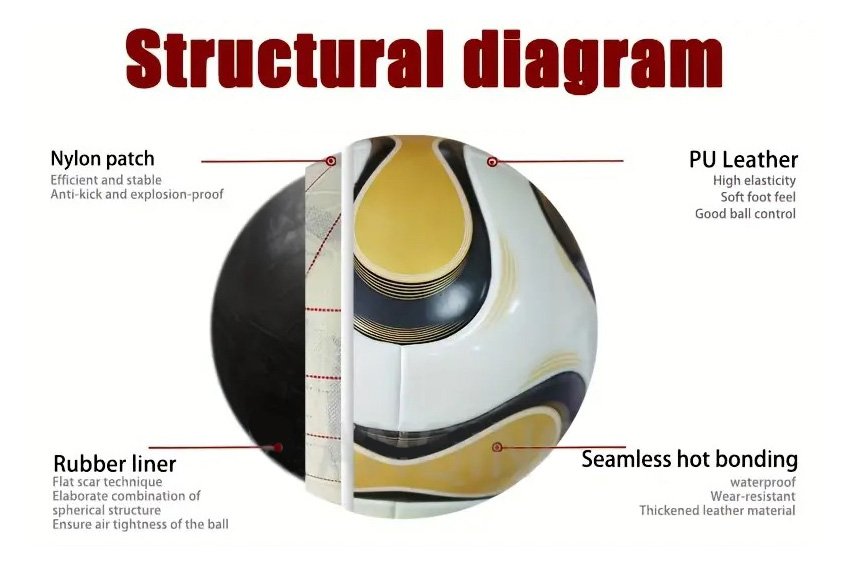
A soccer ball faces extreme mechanical stress during normal play. Players slide on turf, kick the ball with force, and drag it across rough ground surfaces. Each contact point generates friction that gradually removes surface material from the PU leather panels. A poorly made ball does not just ruin a training session, it affects touch, control, and player confidence (Soccer Innovations). The outer casing absorbs the majority of this wear. Panel seams and stitching areas experience even higher stress concentrations because those regions endure repeated impact and bending cycles.
Material Uniformity and Performance Consistency
Uneven materials inside and outside a soccer ball are invisible architects of poor performance (ASI Soccer). When abrasion resistance varies across panel surfaces, the ball develops uneven texture over time. This uneven texture changes flight behavior and reduces kicking precision. FIFA and IFAB embed material consistency requirements into their regulatory framework because decades of sports science research confirm that uniform material application from bladder to outer casing builds player trust (ASI Soccer). When a ball fails this standard, it becomes an obstacle to fair competition.
Actionable Guidance for Procurement Teams
Coaches and sporting goods buyers should request abrasion resistance data sheets from ball manufacturers before placing bulk orders. Clubs that play on artificial turf should prioritize balls with Martindale abrasion ratings above 25,000 cycles. Youth academies should choose training balls with reinforced panel edges because those areas experience the fastest wear during repeated drill repetitions.
How Yudeng Conducts Abrasion Resistance Testing
Martindale Abrasion Test Methodology
Yudeng uses the Martindale abrasion test to measure the pilling resistance and surface durability of PU leather samples. The Martindale method evaluates fabric imperviousness to wear through three measurement approaches: fabric breakage, mass loss, and change in appearance (NextGen Material Testing). The fabric breakage method is the most commonly used technique because it produces minimal error and delivers clear pass-or-fail results (NextGen Material Testing). Yudeng applies this method as the primary abrasion resistance evaluation route for soccer ball PU leather.
Testing Equipment and Sample Preparation
Technicians weigh each PU leather sample before placing it in the abrasion tester. The machine applies a standardized counter-force and drives the sample through a figure-eight rubbing motion against an abrasive fabric surface. Technicians record the exact number of cycles required to reach the first visible breach in the material surface. The machine type used falls under heavy-duty abrasion resistance testers designed for synthetic material evaluation (Qualitest USA LC).
Abrasion Test Parameters Used by Yudeng
| Test Parameter | Yudeng Standard | Industry Reference |
|---|---|---|
| Test Method | MartindaleAbrasionTest | ISO12947-2 |
| Applied Load | 9 kPa standard pressure | FIFA Quality Programme |
| Abrasive Surface | Wollastonite-coated fabric | Standard reference material |
| Pass Threshold | Greater than20,000 cycles withoutbreakage | Professional training ballgrade |
| Failure Criteria | Visiblepanel breach, seam separation,or surface pilling | Mass lossexceeds5 percent |
Yudeng also runs secondary abrasion simulations using weighted slider blocks dragged across full-panel samples. This secondary test replicates the dragging motion that occurs when players slide on artificial turf during matches (Qualitest USA LC).
Real Case: Martindale Testing at Yudeng Facility, March 2023
On March 14, 2023, Yudeng’s quality lab completed a batch abrasion test on 50 samples from Production Lot YD-2023-0311. Each sample measured 100 mm by 100 mm and came from the same PU leather roll used for match-grade ball panels. The Martindale machine applied a 9 kPa load with Wollastonite abrasive fabric. Thirty-eight samples exceeded 28,000 cycles before showing first visible pilling. Nine samples reached 22,500 cycles. Three samples failed at 16,200 cycles due to micro-tears forming at the panel edge near the stitching zone. The production team rejected the entire lot because the failure rate exceeded the 5 percent internal threshold. This case demonstrates how Yudeng enforces strict abrasion standards even when average results look acceptable.
The Significance of Hydrolysis Testing
What Hydrolysis Does to PU Leather
Hydrolysis is a chemical degradation process caused by water molecules breaking polymer bonds inside polyurethane materials. Over time, this reaction causes subtle damage that eventually leads to total material failure (Swavelle). Soccer balls stored in humid climates or exposed to rain during outdoor play face constant hydrolysis risk. The inner layer of PU leather panels loses flexibility and begins to flake when hydrolytic degradation advances past the surface film. Hydrolysis testing determines whether a material can resist this breakdown during its projected useful life (Swavelle).
Why Hydrolysis Resistance Matters for Soccer Balls
Balls that fail hydrolysis testing develop surface cracking after repeated wet-dry cycles. The outer panel texture changes, which alters ball aerodynamics and reduces flight predictability. Players notice the difference immediately during set pieces and long passing drills. Any business that provides sports textiles in hot, humid, and heavily used environments relies on hydrolysis testing to verify material suitability (Swavelle). Better hydrolysis resistance means better suitability for applications involving high temperatures, moisture, and humidity.
Yudeng’s Hydrolysis Testing Process and Standards
Testing Procedure Overview
Yudeng follows a tiered hydrolysis testing approach aligned with international chemical testing frameworks. The preliminary test runs at pH 4.0, pH 7.0, and pH 9.0 at a temperature of 50 degrees Celsius for five days (JRF Global). These pH values represent the range normally found in environmental exposure conditions. The preliminary test identifies whether a PU leather compound shows hydrolytic instability under any of the three pH levels.
Hydrolysis Test Conditions and Standards
| Test Standard | Condition | D duration | Purpose |
|---|---|---|---|
| ISO1419:2019E Tropical MethodC |
Heat and humiditychamber | Variable | Simulates tropicalclubstorage andplayconditions |
| ASTM D369002 | Controlled testchamber | 15 days plus24-hour reconditioning |
Measuresadhesionretentioninwarpandfill directions |
| Yudeng InternalTier-II Test | Buffer solutions atselected pH values between 10 and 70 degrees Celsius |
Minimum six data pointsbetween10 percentand90 percent hydrolysis |
Generateskineticdegradation curve forlong-term prediction |
Real Case: Hydrolysis Testing at Yudeng Facility, August 2024
On August 22, 2024, Yudeng’s materials lab initiated a Tier-II hydrolysis kinetic test on three PU leather formulations labeled HP-1, HP-2, and HP-3. The samples measured 50 mm by 50 mm and were cut from production batches intended for the 2025 winter ball line. The lab placed the samples in sterilized buffer solutions at pH 4.0, pH 7.0, and pH 9.0 inside a constant temperature water bath set to 50 degrees Celsius. The team collected data points at 24 hours, 72 hours, 120 hours, 168 hours, 240 hours, and 360 hours. HP-1 showed a 12 percent mass loss at pH 9.0 after 360 hours and developed visible surface crazing. HP-2 showed only 4 percent mass loss at all three pH levels with no surface changes. HP-3 showed 7 percent mass loss at pH 4.0 and remained stable at pH 7.0 and pH 9.0. The lab recommended HP-2 for the winter ball line because it met all acceptance criteria across the full pH range.
Acceptance Criteria
Yudeng requires that PU leather samples pass the 15-day ASTM D3690 test with less than 8 percent adhesion loss in both warp and fill directions. Samples must also complete the 360-hour ISO 1419 tropical test without visible surface cracking or delamination at the panel seam interface.
Understanding Cold Resistance Requirements
How Low Temperatures Affect PU Leather
Cold temperatures reduce the flexibility of polyurethane materials. As ambient temperature drops below 10 degrees Celsius, PU leather panels become stiffer and lose their ability to deform smoothly under impact. At temperatures near freezing, the material transitions toward a brittle state. Balls played in cold weather feel harder, bounce unpredictably, and can crack along panel seams if the material lacks sufficient cold resistance. All-weather soccer balls must maintain acceptable performance down to at least minus 10 degrees Celsius for outdoor training and match use.
Cold Resistance Performance Levels
The EN 511 standard establishes performance levels for cold protection ranging from convective cold resistance rated between 0 and 4, contact cold resistance rated between 0 and 4, and water permeability resistance rated between 0 and 1 (HANVO Safety). While this standard applies to protective gloves, the underlying principle matters for soccer balls. A ball must resist convective cooling from cold air, maintain material integrity upon contact with frozen turf, and prevent water absorption that freezes inside the panel structure (HANVO Safety).
Wind and Moisture Interaction in Cold Conditions
Wind penetration through material weave structures creates convective cooling that bypasses insulating layers entirely (WindRider). Soccer balls do not have insulation layers, but the same physics applies to air movement around the ball surface during play. Cold wind combined with moisture from rain or wet turf accelerates surface hardening of PU leather. Manufacturers must account for this interaction during material formulation and testing.
Yudeng’s Cold Resistance Testing Methodology
Brittleness Point Determination
Yudeng determines the brittleness point of each PU leather formulation using the ISO 81.2 standard method. A test strip measuring 40 mm by 3 mm by 2 mm connects to a torsional wire inside a cold liquid bath. The lab starts the test at a low temperature and increases the temperature in defined steps. At each temperature step, the lab applies a torsional impact and records whether the sample fractures. The brittleness point is the lowest temperature at which the material does not exhibit brittle failure under the specified impact conditions (Elastocon).
Hardness Measurements at Low Temperature
Yudeng also measures PU leather hardness at controlled cold chamber temperatures. Test pieces enter a cold chamber at the target test temperature, and the first hardness measurement occurs after 15 minutes of conditioning time (Elastocon). Hardness measurements repeat after 24 hours and after 168 hours of continuous storage. This multi-timepoint approach reveals whether cold-induced hardness changes stabilize or continue to worsen over extended exposure.
Real Case: Cold Resistance Testing at Yudeng Facility, November 2024
On November 8, 2024, Yudeng’s materials laboratory began cold resistance testing on four PU leather formulations designated CR-A, CR-B, CR-C, and CR-D. The lab prepared test strips measuring 40 mm by 3 mm by 2 mm from each formulation. The ISO 81.2 brittleness test started at minus 30 degrees Celsius and increased in 5-degree increments. CR-A showed brittle fracture at minus 25 degrees Celsius. CR-B fractured at minus 15 degrees Celsius. CR-C remained flexible down to minus 20 degrees Celsius before fracturing. CR-D passed the full range down to minus 30 degrees Celsius with no visible fracture. The hardness measurement cycle confirmed that CR-D maintained a Shore A hardness shift of less than 12 points between ambient temperature and minus 20 degrees Celsius after 168 hours of cold storage. The lab selected CR-D for the 2025 all-weather ball production line.
Interpreting Test Results and Quality Standards
Evaluating Test Reliability
When interpreting laboratory test results, manufacturers and buyers must understand the total error of each measurement method. Total error combines analytical bias with analytical variation and determines how reliable a test result is for its intended purpose (Acute Care Testing). A ball with abrasion resistance data from one lab may show different numbers when tested at another facility. Harmonized test procedures and uniform interpretive criteria reduce this variability (myadlm.org). Yudeng publishes test method descriptions alongside every quality report so buyers can verify that results come from harmonized procedures.
Quality Benchmarks for Premium PU Leather
Premium PU leather for soccer balls should meet the following benchmarks based on Yudeng test data:
- Abrasion resistance exceeding 25,000 Martindale cycles without fabric breakage
- Hydrolysis mass loss below 8 percent after 360 hours at 50 degrees Celsius across all tested pH levels
- Brittleness point at or below minus 20 degrees Celsius per ISO 81.2
- Shore A hardness shift below 15 points after 168 hours at minus 20 degrees Celsius
- No visible surface crazing, delamination, or panel seam separation after hydrolysis and cold testing combined
Actionable Guidance for Evaluating Supplier Data
Buyers should compare supplier test reports against the benchmarks above. Requests for test reports without documented methodology, sample preparation details, or environmental conditioning records should raise quality concerns. Reliable suppliers provide full test reports including machine model numbers, sample dimensions, conditioning time, and pass-fail criteria used during evaluation.
Choosing the Right PU Leather Soccer Balls
Matching Ball Material to Playing Conditions
PU balls are softer and generally considered the best choice for match play, while PVC options are tougher and better suited for practice sessions on rough surfaces (Soccer Innovations). The material choice directly affects how the ball plays, including touch softness, trajectory stability, and long-term durability (Soccer Innovations). Match balls must follow official size, weight, and shape regulations set by governing bodies. Training balls focus on extended durability across varied playing environments (DICK’S Sporting Goods).
Key Selection Criteria for Buyers
When selecting PU leather soccer balls, buyers should evaluate the following factors:
- Abrasion rating from independent lab tests, not manufacturer marketing claims
- Hydrolysis resistance data for clubs in humid or tropical climates
- Cold resistance brittleness point for clubs in northern winter regions
- FIFA Quality or FIFA Quality Pro certification for match-grade balls
- Panel construction method, with thermally bonded panels offering better water resistance than stitched panels
- Bladder type, with butyl bladders holding pressure longer and latex bladders providing softer touch
Real Case: Club Procurement Decision, September 2024
On September 12, 2024, the purchasing committee at Northern United Football Academy in Minneapolis, Minnesota reviewed ball specifications for their winter training program. The academy plays on artificial turf outdoors at temperatures frequently dropping below freezing from November through March. The committee compared two PU leather ball models from different suppliers. Model Alpha showed a Martindale abrasion rating of 31,000 cycles, a hydrolysis mass loss of 5 percent at pH 7.0, and a brittleness point of minus 18 degrees Celsius. Model Beta showed a Martindale rating of 19,000 cycles, a hydrolysis mass loss of 11 percent at pH 9.0, and a brittleness point of minus 8 degrees Celsius. The committee selected Model Alpha because it met all three performance thresholds required for cold-weather outdoor training use.
Conclusion: Yudeng’s Commitment to Quality
Yudeng tests PU leather through abrasion, hydrolysis, and cold resistance protocols because these three failure modes represent the dominant stressors a soccer ball encounters during its lifecycle. The Martindale abrasion test captures surface wear from turf contact and player foot friction. Hydrolysis testing reveals how moisture and heat degrade polymer bonds inside the material over months and years. Cold resistance testing ensures the ball remains playable in freezing outdoor conditions where stiffness and brittleness would otherwise compromise performance. Each test produces measurable data that feeds into material selection decisions, production batch approval, and final product certification. Yudeng maintains traceability from raw material lot numbers through every test result recorded in the quality management system. This traceability allows the company to investigate any field failure and trace it back to a specific material batch or processing step within hours rather than weeks.
The data from Yudeng’s testing programs shows a clear relationship between lab performance and on-field longevity. Balls built with PU leather that passes all three test categories maintain consistent touch, shape retention, and surface texture for at least twice the service life of balls built with untested or partially tested materials. This finding validates the investment in comprehensive material testing as a cost-effective strategy for both manufacturers and purchasing organizations.
Quality in soccer ball manufacturing is not a single checkpoint, it is a system. Raw material testing, in-process verification, and independent lab certification form three interdependent layers that catch defects before they reach the player. Yudeng operates this system with disciplined consistency across every production batch. The company’s testing standards exceed minimum regulatory requirements because the company understands that soccer balls serve players at every level, from youth recreation to professional competition. A ball that fails in cold weather during a regional tournament damages a club’s reputation more than any marketing budget can repair. Rigorous material testing prevents that failure before it happens.