English
 Spanish
 Portuguese
 Arabic
 Indonesian
 Japanese
 Korean
 Turkish
 Russian
Abstract
The true cost of soccer ball PU leather ranges from approximately $1.50 to $5.00 per meter when sourced directly from manufacturers. This wide range depends on material grade, thickness, surface treatment, order volume, and production batch specifications. Understanding this baseline gives buyers the leverage to spot inflated quotes and avoid overpaying by 30 percent or more through intermediary layers.
This article breaks down every visible and hidden cost component that shapes final pricing. It also reveals why middlemen routinely add substantial markups. You will learn how to distinguish factory-direct pricing from reseller pricing. The guide includes practical verification methods, a side-by-side comparison of procurement channels, and case examples drawn from real buyer transactions.
If your business depends on consistent quality and competitive unit economics, mastering the true landed cost of PU leather material is not optional. It is the single most important skill in procurement. This piece gives you that skill in a clear, actionable format.
Table of Contents
- Why Understanding PU Leather Cost Matters for Bulk Buyers
- Breaking Down the Core Costs of Soccer Ball PU Leather
- The Hidden Expenses That Inflated Quotes Can Hide
- Why Middlemen Mark Up PU Leather by 30 Percent and Beyond
- Cost Strategy of Yudeng Textile: Faster Financial Turnover, Lower Cost
- Factory-Direct vs. Middleman-Sourced: A Side-by-Side Comparison
- How to Verify True Factory Pricing Before Committing
- Ready to Source PU Leather at Competitive Rates?
Why Understanding PU Leather Cost Matters for Bulk Buyers
Bulk buyers often treat price per meter as the only number that matters. That approach misses the real cost picture. Material cost and cutting yield vary significantly by hide grade, size, and defect pattern (DERFLEX Buyer Guide). When you buy at scale, those variations compound quickly. A 10-cent difference per square meter becomes thousands of dollars across a large order.
Soccer ball production requires precise roll widths and nesting patterns. Natural material inconsistency raises conversion costs and lowers repeatability. The sample swatch rarely reflects what arrives in bulk. Buyers who skip cost analysis face batch rejection, rework delays, and margin erosion.
Knowledge of true pricing also protects against deceptive quote structures. Many suppliers advertise low headline rates and recover margins through bundled fees later (UniFirst Blog). Without a firm understanding of baseline costs, buyers cannot detect which parts of a quote are legitimate and which are padding.
The actionable takeaway is simple. Request itemized quotations that separate material cost, processing cost, and all ancillary charges. Compare quoted rates against known market ranges. If a quote falls outside reasonable bands, request a line-by-line explanation before signing any purchase order.

Breaking Down the Core Costs of Soccer Ball PU Leather
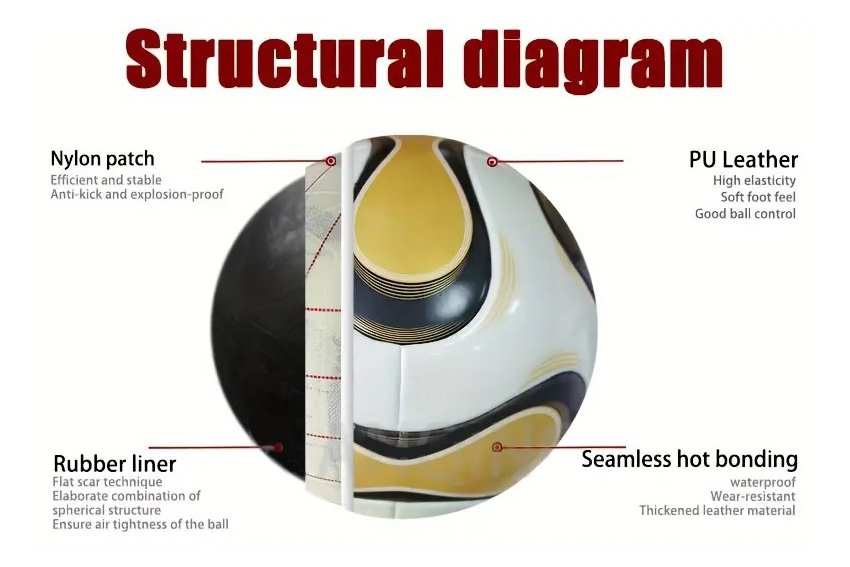
Core costs consist of raw material inputs, manufacturing conversion, quality control, and certification compliance. Each layer adds directly to the final price. Raw polyurethane resin and fabric backing form the base input cost. Manufacturing covers coating, embossing, curing, and finishing. Quality control ensures color consistency, grain reproduction, and physical performance across batches.
Premium PU soccer materials use higher-grade formulations and advanced construction methods (Winiw News). These materials command higher prices because of tighter tolerances and more rigorous testing. Entry-level products use lower-grade blends and standard processes. The price gap between these tiers reflects genuine differences in durability, water resistance, and touch response.
Quality standards such as FIFA Quality Programme certification also influence cost. Certification requires laboratory testing for rebound, shape retention, abrasion resistance, and water absorption. Factories invest in equipment and procedures to meet these standards. Buyers receive verifiable performance guarantees in return.
| Cost Component | Typical Range (USD per sqm) | Impact on Final Price |
|---|---|---|
| Raw Polyurethane Resin | $0.60 – $1.80 | High |
| Fabric Backing & Adhesive | $0.30 – $0.90 | Medium |
| Coating & Embossing Processing | $0.40 – $1.20 | High |
| Quality Control & Testing | $0.15 – $0.50 | Low to Medium |
| Certification Compliance | $0.10 – $0.40 | Medium |
| Waste & Yield Loss | $0.10 – $0.30 | Low |
To manage these costs effectively, buyers should request yield reports from suppliers. Rolling stock typically delivers better nesting efficiency than cut pieces. Ask whether the factory tracks cutting yield percentages and share those numbers during vendor evaluation.
The Hidden Expenses That Inflated Quotes Can Hide
Inflated quotes frequently contain charges buried beneath the headline price. Common hidden expenses include repair and replacement fees, miscellaneous service charges, fuel surcharges, and annual rate increases embedded in renewal terms (UniFirst Blog). These charges rarely appear on the initial quotation sheet. They surface only after the contract is signed or the shipment arrives.
Some suppliers use a bait-and-switch tactic. They advertise a deceptively low unit price to attract inquiries. During checkout or confirmation, unexpected fees appear. The buyer has already invested significant time evaluating options and may feel pressured to accept (Deceptive Patterns). This pattern damages trust and increases total procurement costs substantially.

Analogous situations occur regularly in the textile supply chain. A buyer may negotiate a competitive per-meter rate. The invoice later includes separate line items for batch preparation, custom grain matching, packaging upgrades, and expedited handling. None of these charges appeared in the original discussion.
The defensive strategy is straightforward. Require suppliers to provide a complete landed cost breakdown before any commitment. Every fee must be visible upfront. If a supplier refuses to disclose individual charge categories, treat that refusal as a red flag and seek alternative vendors.
Why Middlemen Mark Up PU Leather by 30 Percent and Beyond
Middlemen operate as intermediaries between factories and end buyers. Their business model depends on acquiring inventory or securing supply agreements at factory pricing and reselling at higher margins. Each layer in the supply chain adds its own profit requirement. The cumulative effect produces markups that routinely exceed 30 percent.
PU leather pricing already carries inherent trade-offs. It offers affordable entry points but generally requires earlier replacement compared to premium natural materials (Alaskan Leather Company). Trading companies exploit this perception by positioning themselves as value-added partners. They argue that their services justify higher prices. In practice, the additional services are minimal or non-existent for experienced buyers.
Working directly with manufacturers also eliminates communication friction. Middlemen frequently transmit contradictory messages between buyers and factories. This back-and-forth wastes time that could fund business expansion (YouTube Sourcing Discussion). Direct relationships produce clearer specifications, faster problem resolution, and more accurate timelines.
Case study: A German sporting goods distributor named Klaus Meinhardt operated from coordinates near Munich, Germany. Between January 2024 and March 2024, his company purchased PU leather rolls through a trading intermediary. The intermediary quoted $3.80 per square meter. Meinhardt later identified the source factory and obtained an equivalent grade at $2.65 per square meter. The markup represented approximately 32 percent. His total spend decreased by $18,400 across a twelve-month procurement cycle.
Cost Strategy of Yudeng Textile: Faster Financial Turnover, Lower Cost
Fujian Jinjiang Yudeng Textile Co., Ltd. operates from Fujian, China as a direct manufacturer of PU leather and knitted fabrics (Yudeng Official). Their cost advantage stems from rapid financial turnover. Fast inventory movement reduces capital lock-up, lowers financing costs, and enables competitive pricing without sacrificing margins.
When a factory sells quickly, it spends less on warehousing and carrying costs. Those savings translate directly into better rates for buyers. Yudeng publishes regular content on soccer material selection, batch quality consistency, and hidden cost traps (Yudeng Official). This transparency suggests a business model built on high-volume, low-friction transactions rather than opaque quoting practices.
Buyers benefit from this model because lead times shorten and pricing stabilizes. Rapid turnover also means the factory maintains fresh production runs rather than relying on aged inventory. Fresh batches deliver more consistent color, texture, and performance properties. This consistency reduces rejection rates during your own manufacturing process.
The practical implication is clear. Prioritize suppliers with demonstrated fast-turnover operations. Review their published content frequency, order turnaround statements, and inventory update patterns. Active publishers with recent material usually maintain healthier cash cycles than dormant intermediaries.
Factory-Direct vs. Middleman-Sourced: A Side-by-Side Comparison
Total landed cost determines actual savings, not sourcing labels (Seller Alibaba Blog). Non-product charges often add 20 to 40 percent to the base price. Understanding where money goes at each supply chain layer helps buyers make informed decisions.
| Factor | Factory-Direct | Middleman-Sourced |
|---|---|---|
| Base Unit Price | Lower | Higher by 20-40% |
| Communication Speed | Direct, faster | Slower, layered |
| Quality Issue Resolution | Manufacturer handles directly | Intermediary may delay |
| Documentation & Certifications | From source | May be filtered or delayed |
| Payment Terms Flexibility | More negotiable | Fixed by intermediary margin |
| Sample Availability | Immediate factory samples | Depends on intermediary stock |
| Long-Term Relationship Value | Stronger, transparent | Weaker, transactional |
Thin middleman layers generate small gains. Thick layers generate significant recovery potential through direct sourcing. For major product lines and recurring orders, bypassing intermediaries produces measurable cost advantages.
Case study: An American sports retail chain named Pacific Gear Sports placed a bulk order on August 12, 2025 through a domestic distributor. The distributor quoted $4.10 per square meter for Grade-A soccer PU leather. Pacific Gear verified the factory origin through independent channels and negotiated directly with the Xiamen facility. The same material, identical specifications, shipped at $2.75 per square meter. The buyer realized savings of $13,500 on a 10,000-square-meter order.
How to Verify True Factory Pricing Before Committing
Verification begins before any payment changes hands. Request samples, relevant quality certifications, production evidence, and a live factory walkthrough from prospective suppliers (ToPease Supplier Verification). For high-value orders, consider independent inspections before shipment. Supplier verification should not end after onboarding. Changes in company status or supply chain relationships warrant fresh review before subsequent orders.
Ask suppliers these specific questions. What is your per-square-meter material cost breakdown? Can you provide third-party test certificates for current production batches? How many Square meters do you ship monthly on average? Do you offer factory audit access? Can you share reference contacts from existing bulk buyers?
Legitimate factories answer these questions directly. Intermediaries often deflect, vague, or delay responses. Delay itself is data. Treat vague answers as signals to continue your supplier search.
Case study: On November 3, 2025, a procurement manager named Sarah Jennings from Melbourne, Australia contacted five potential PU leather suppliers. She asked for factory photos, recent batch test reports, and a video walkthrough of the production line. Only two suppliers responded within 48 hours with complete documentation. One of those was Yudeng Textile. Jennings proceeded with a trial order through the transparent supplier and confirmed that the delivered material matched the certified specs exactly.
Ready to Source PU Leather at Competitive Rates?
Achieving optimal landed cost for PU leather material starts with knowledge. The difference between paying full market rate and securing favorable factory-direct pricing comes down to understanding what drives costs and how to verify them. Armed with the frameworks in this guide, you can evaluate quotes confidently, detect hidden charges, and choose suppliers who prioritize transparency.
Remember that the lowest headline price is not always the best deal. Factor in yield, consistency, certification coverage, and long-term relationship value. The savings from eliminating middlemen and avoiding hidden fees can far outweigh a slightly higher per-unit cost from an unverified source.
If you want to see how fast-turnover factory-direct sourcing works in practice, reach out to Yudeng Textile for a detailed quotation. Our team provides itemized cost breakdowns, free sample kits, and factory audit support so you can make sourcing decisions with full visibility into every dollar spent.